Functional test station for any product
Run the functional checks in order, read any instrument, decide pass or fail, and send the result to the PLC and the MES.
Uses
Details
OpenEOL is an open-source Python framework for end-of-line testing. Build the test your product needs, from rotor balancing to acoustic checks, with drivers and analysis that OpenEOL already has.
One framework runs many different stations. Each new machine starts from proven code, not from a new software platform.
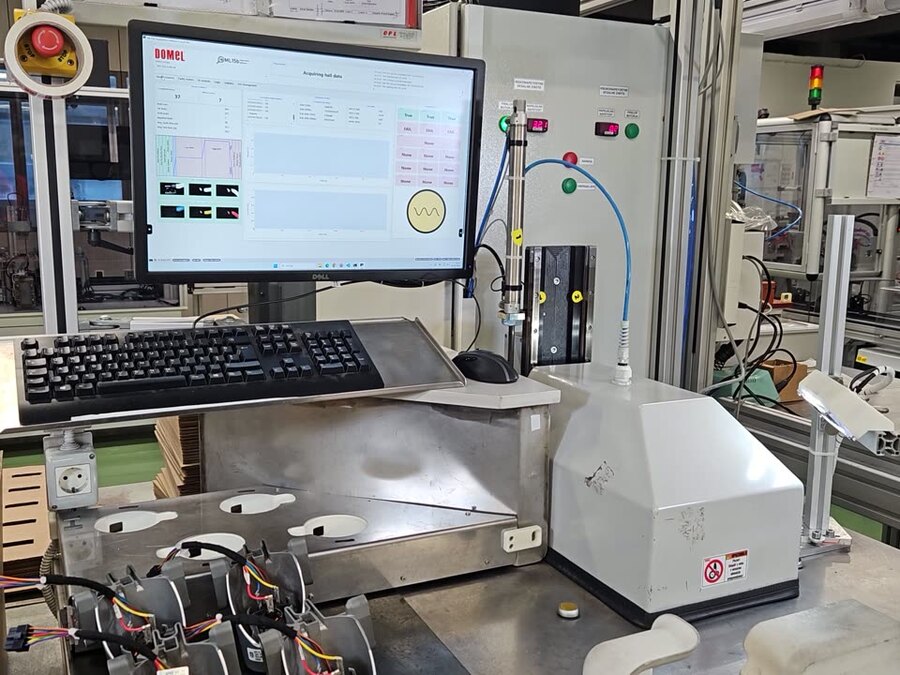
A test sequence for any product, one record per serial number, and the results sent on to the MES and the quality database.
3 use cases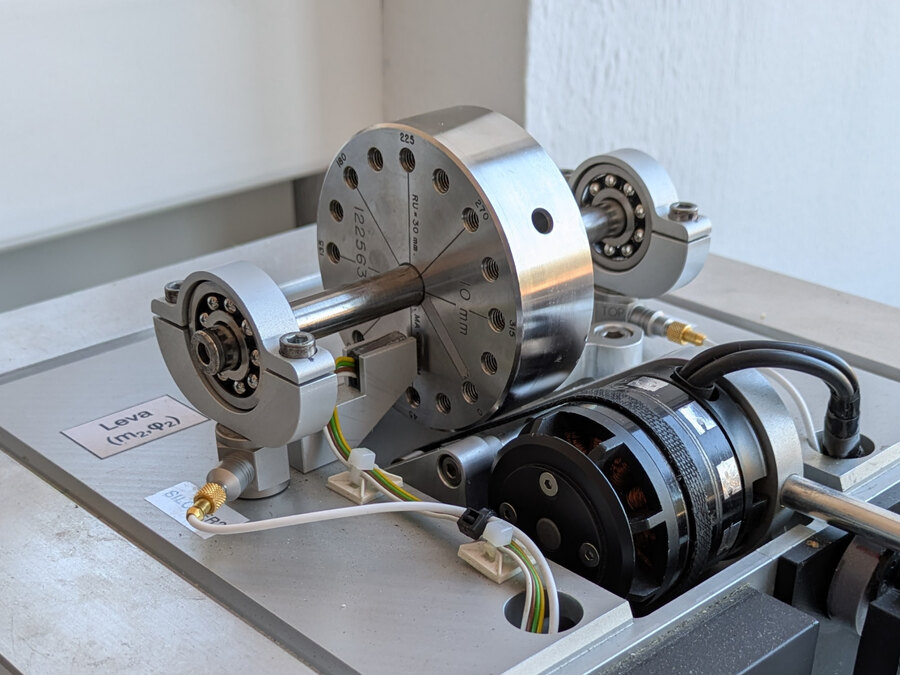
Balancing machines and benches for motors, fans, pumps, gearboxes and bearings.
10 use cases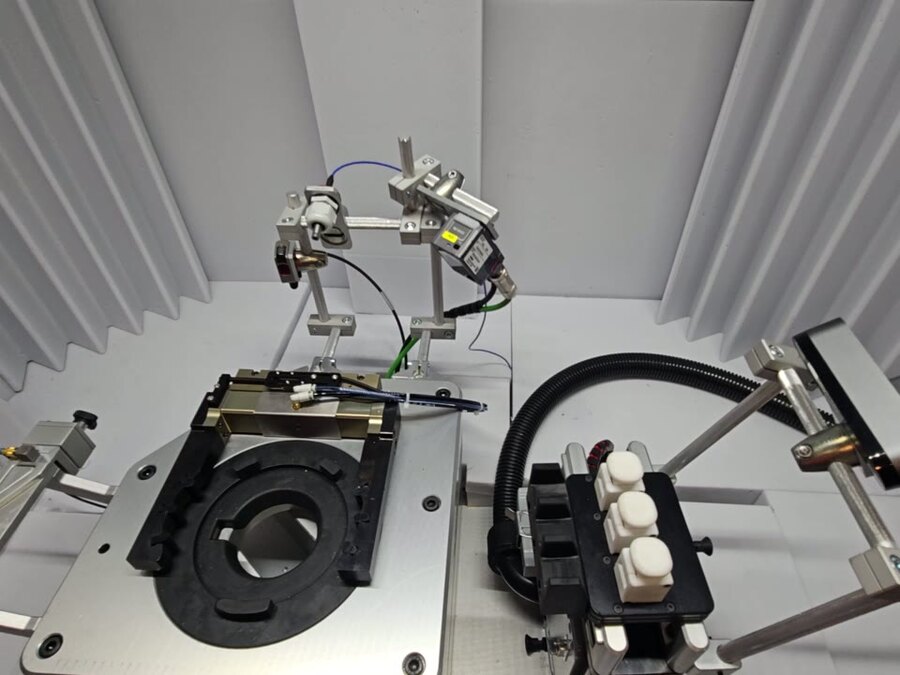
Sound level, sound power and noise source tests for finished parts.
3 use cases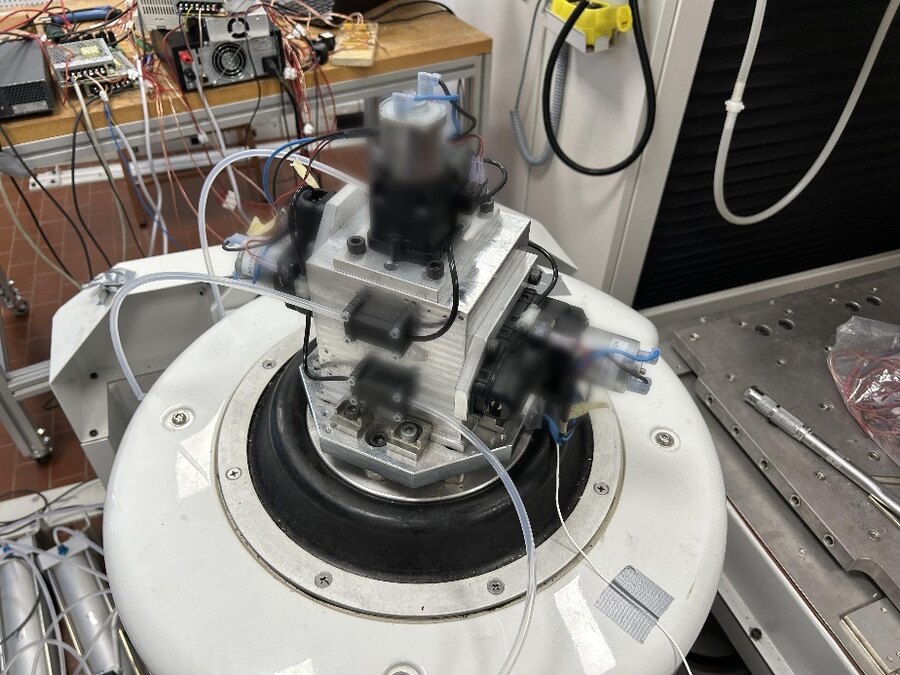
Modal tests, resonance inspection and vibration measurement without contact.
3 use cases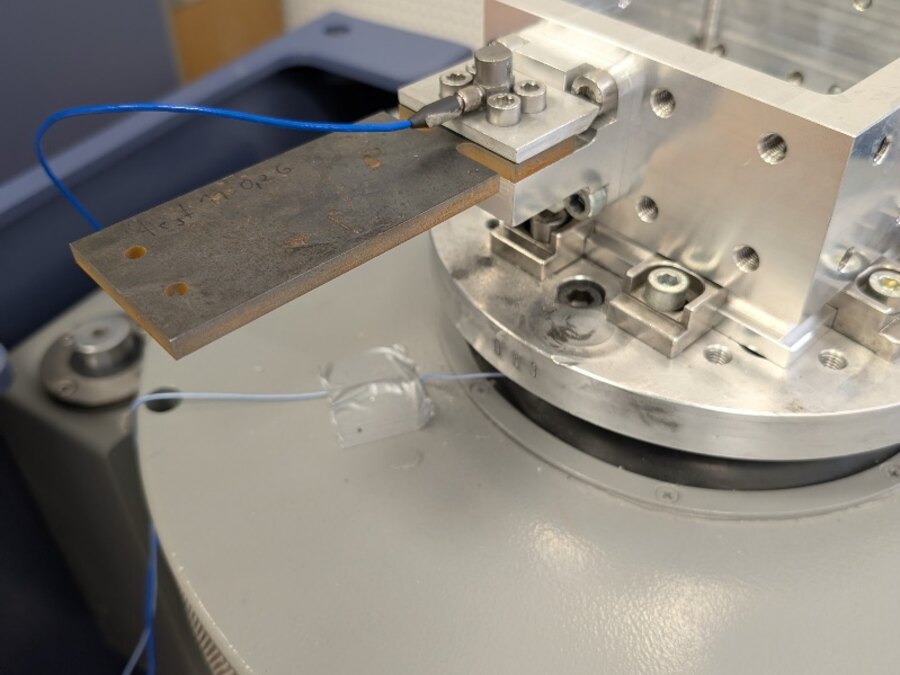
Test profiles, endurance cycles, chamber tests and full-field stress and strain.
6 use cases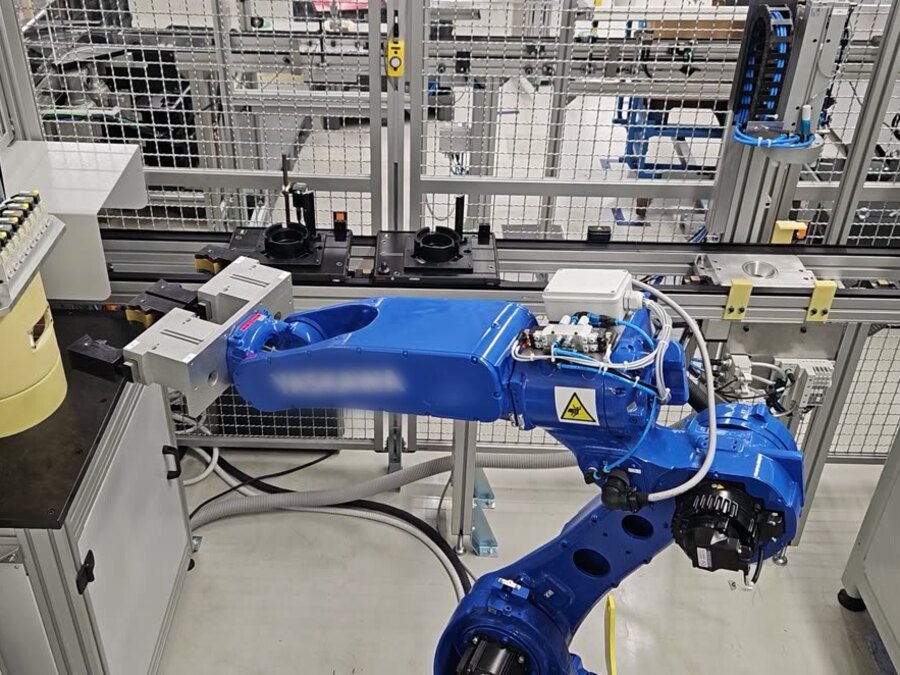
Checks on the joining process and on the finished joint.
3 use cases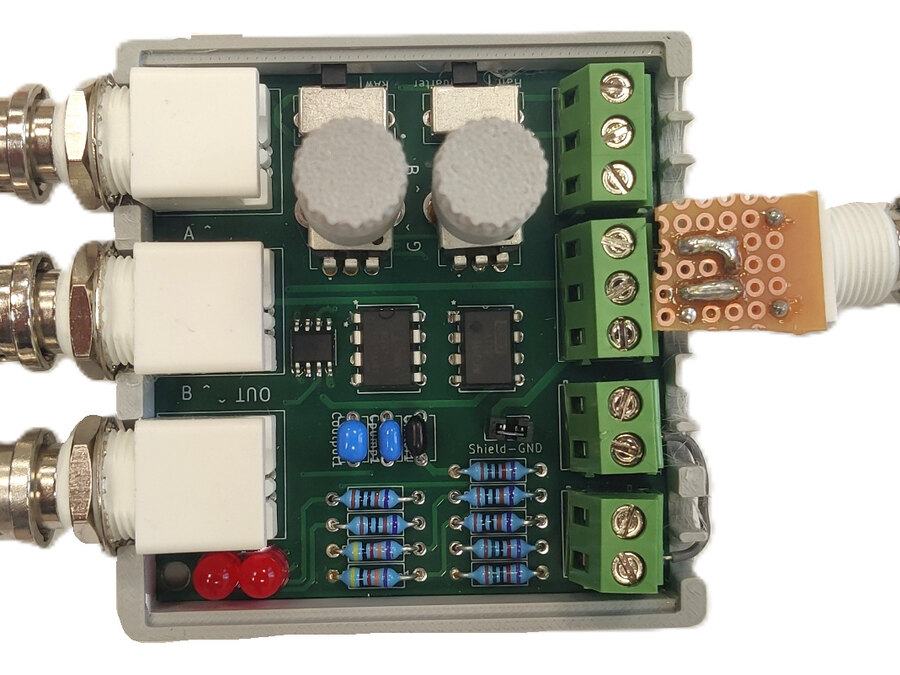
Functional and safety tests for boards, power electronics, harnesses and battery packs.
6 use casesA test sequence for any product, one record per serial number, and the results sent on to the MES and the quality database.
Run the functional checks in order, read any instrument, decide pass or fail, and send the result to the PLC and the MES.
Push results, serial numbers and status to the plant systems, and pull work orders and recipes back.
Store raw signals and results from every station in one place, with control charts, capability indices and drift alerts.
Balancing machines and benches for motors, fans, pumps, gearboxes and bearings.
Measure unbalance in one or two planes, report the correction mass and angle, and check the result against the tolerance.
Keep the frame, bearings and drive of a Schenck, Hofmann or CEMB machine, and replace the measurement electronics and software.
Measure force and moment under the feet of a running assembly and compute the unbalance, with no bare rotor to mount.
Correct rotors that bend above their first critical speed, with one correction set for each mode.
Run the motor through a speed profile, read vibration and noise, and check spectra, orders and band levels against limits.
Load the motor with a dynamometer, sweep the operating range, and check torque, power and efficiency against the specification.
Run the fan at its rated points on a chamber or a duct, and check flow, pressure, noise and vibration against the ISO 5801 curve.
Measure flow, head, power and noise at each duty point, and find the point where cavitation starts.
Drive the gearbox under load, and compute order spectra and transmission error from an encoder on each shaft.
Spin the bearing, compute its fault frequencies from the geometry, and grade it with envelope analysis.
Sound level, sound power and noise source tests for finished parts.
Measure the A-weighted level and octave, third-octave and narrowband spectra in a hood or a booth. Sound power to ISO 3744 is an option.
Compute radiated sound power from the surface vibration that a camera sees, with no microphone array and no anechoic room.
Measure blocked forces at the mounting points once, then predict the noise of the unit in any housing.
Modal tests, resonance inspection and vibration measurement without contact.
Excite the part with an automatic hammer or a shaker, compute FRFs with coherence and double-hit checks, extract the modes, and screen parts on the line.
Tap the part, extract the resonance peaks, and reject parts whose peaks move away from those of known-good parts.
Get operating deflection shapes from video, with no sensor on a part that is too light, too hot or too small.
Test profiles, endurance cycles, chamber tests and full-field stress and strain.
Compute the fatigue damage spectrum from a road or transport recording, and derive a shorter profile that causes the same damage.
Hold the part at resonance, track its natural frequency and damping, and stop the test when a crack starts.
Cycle a mechanism, spring, switch or actuator, log force, displacement, current and temperature for each cycle, and catch drift.
Drive the chamber through ramp, soak and dwell while the part runs its function cycle, with pass or fail at each point.
Load the part in cycles and turn the infrared signal into a full-field stress map with thermoelastic stress analysis.
Replace a strain gauge with a full strain map, and pass or fail on peak strain or deformation shape.
Checks on the joining process and on the finished joint.
Record force against displacement through each stroke, and check the curve against envelopes from known-good parts.
Tap a finished joint and read back the set force that was applied, from its dynamic response.
Run a bought-in leak tester as one step, and store its result and raw curve with the part record.
Functional and safety tests for boards, power electronics, harnesses and battery packs.
Watch the part through its function cycle and flag every region that goes over its temperature limit.
Power a board in a bed-of-nails fixture, check rails and outputs, talk to it over UART, CAN or SPI, then flash and lock the firmware.
Drive the unit across its operating points and measure efficiency, regulation, ripple and power quality.
Run the BMS handshake over CAN, check cell voltages, temperatures, contactors and precharge, then add leak and insulation steps.
Measure connector mating force and crimp pull-off, check the clips, read the label, and run the continuity check.
Run a hipot, insulation or ground bond tester as one step, with one record per serial number.
Drivers, task sequences and analysis that already run go straight into the next station.
The sequence, the limits and the analysis are open code. Your engineers change them when the product changes.
The Python tools your engineers use in development run inside the station, so the numbers agree.
Operators, maintenance staff and programmers work with the same software on each station.
Results go to your database and your plant systems. The source code stays available to you.
Use OpenEOL on your own, build the station together with us, or order the complete station. The code and the results stay yours in every case.
OpenEOL is open source. Read the code, build your own station, and ask us for training or support.
We take the parts that need us, and your engineers keep the station.
We design the station, build it and hand it over at your plant. You get the source code with it.
Get in touch.
janko.slavic@fs.uni-lj.si